

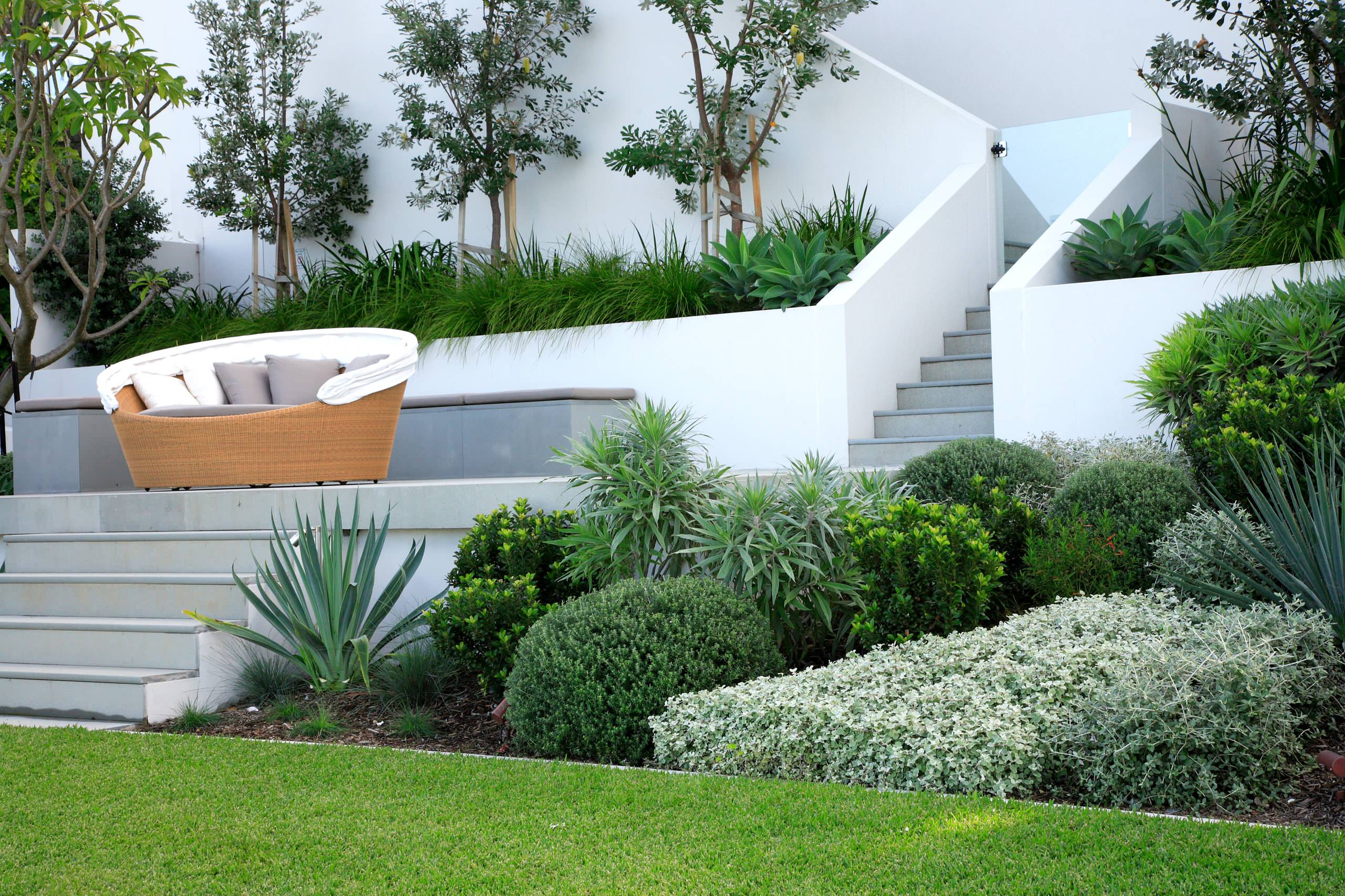
Low maintenance landscaping is about working with your climate rather than against it. In 2026, the most popular “Low Maintenance Landscaping“ strategies include xeriscaping (using drought-tolerant plants like lavender and rosemary), installing ground covers (like creeping thyme) to eliminate mowing, and using hardscaping (gravel paths or stone patios) to reduce the need for watering and weeding. Choosing native perennials ensures your yard looks put-together year-round with minimal intervention.
**The core principle:** Replace high-effort elements (thirsty grass, annual flowers, bare soil) with low-effort ones (native plants, ground cover, mulch) and design your space so it manages itself.
—
Start With the Lawn – The Biggest Time Drain
The average American lawn requires mowing every 5-7 days in growing season, plus fertilizing, aerating, dethatching, edging, and watering. That’s 40-80 hours a year for a standard suburban yard.
The single biggest step toward a low-maintenance yard is **reducing your lawn area**.
You don’t have to eliminate it. But shrinking it by even 30-40% and replacing it with mulched beds, ground cover, or hardscaping dramatically cuts your weekly commitment.
—
Best Low-Maintenance Plants
The key word is **native**. Native plants evolved in your local climate – they know how to handle the rain patterns, soil type, and temperature swings without any help from you.
| Plant Type | Examples | Watering Need | Maintenance Level |
|—|—|—|—|
| Native perennials | Black-eyed Susan, coneflower, salvia | Low (once established) | Very low |
| Ornamental grasses | Karl Foerster, Blue Oat Grass | Very low | Very low |
| Native shrubs | Ninebark, spicebush, native viburnum | Low | Low |
| Succulents | Sedum, agave, yucca | Minimal | Very low |
| Groundcovers | Creeping thyme, pachysandra, clover | Low | Very low |
| Drought-tolerant trees | Redbud, serviceberry, native oak | Low after 1-2 years | Low |
**Key rule:** Any plant needs regular watering for its first one to two growing seasons while roots establish. After that, most natives can survive on rainfall alone in most US climates.
—
Ground Cover Alternatives to Grass
These are your best weapons against weeds and bare soil – without the mowing:
**Mulch** – 2-3 inches of shredded bark or wood chip mulch suppresses weeds, retains moisture, and feeds the soil as it breaks down. Needs refreshing every 1-2 years.
**Clover** – Micro clover lawns are drought-tolerant, nitrogen-fixing, and need mowing only a few times per year. They stay green in heat that kills regular grass.
**Creeping thyme** – Low, fragrant, purple-flowering. Spreads to fill gaps. Tolerates foot traffic and drought. No mowing required.
**Gravel or decomposed granite** – Best for dry climates or high-traffic utility areas. Zero watering, zero weeding with weed barrier underneath.
**River rock** – Decorative and permanent. Combines well with drought-tolerant plants and works as a mulch replacement in hot, dry zones.
—
Smart Design Principles That Cut Long-Term Work
Good landscaping design does the maintenance for you. These are the principles that matter most:
**Group plants by water needs.** Put thirsty plants near each other (and near your hose). Put drought-tolerant plants together further out. This prevents over- or under-watering across the yard.
**Use curved, simple bed edges.** Straight-edged formal beds require constant maintenance to keep neat. Soft, organic curves are forgiving and easier to maintain.
**Limit the number of species.** A yard with 5-7 well-chosen plants looks more intentional and is easier to manage than one with 25 different varieties all needing different care.
**Plant densely.** Dense planting crowds out weeds naturally. Leave proper spacing for mature size – not current size – but plan for coverage.
**Slope beds away from the house.** Proper grading prevents water pooling, which is where mosquitoes breed and where overwatering problems start.
—
One-Time Investments That Save Years of Work
| Investment | Upfront Cost | Long-Term Payoff |
|—|—|—|
| Drip irrigation system | $100-$400 DIY | Cuts watering time to zero, reduces waste |
| Landscape fabric + mulch | $50-$200 | Suppresses weeds for 3-5 years |
| Raised garden beds | $80-$300 | Eliminates ground weeding, better soil control |
| Robot lawn mower | $300-$1,500 | Mows automatically; no time invested |
| Hardscaping (patio, path) | $500-$3,000+ | Permanently replaces lawn in high-traffic zones |
| Soaker hose system | $30-$80 | Automated watering for beds and borders |
Even just adding a drip irrigation system and a good layer of mulch can cut your weekly yard time in half – permanently.
—
Weekend Project Checklist to Get Started
If you want to start transforming your yard toward low maintenance, here’s a simple sequence:
- **Week 1:** Map your yard and identify the highest-effort zones (usually: bare soil areas, struggling grass patches, beds that need constant weeding)
- **Week 2:** Lay weed barrier fabric and 3 inches of mulch in those zones – immediate impact, minimal cost
- **Week 3:** Choose 3-5 native perennials suited to your USDA hardiness zone and plant them in the mulched beds
- **Week 4:** Set up a simple soaker hose or drip line to the new beds
- **Ongoing:** Let it grow in. Resist the urge to over-manage – that’s the whole point
—
Final Thought
Low maintenance landscaping is a long game. The first year involves some work and some investment. By year two, you’re watering less. By year three, your yard mostly runs itself.
The goal isn’t zero effort – it’s spending your effort once, at the design stage, instead of repeatedly, every weekend, forever.
That’s a trade worth making.
